
Hyundai Commission: Tarek Atoui, Tate Modern
Digital fabrication for Tarek Atoui’s Hyundai Commission at Tate Modern
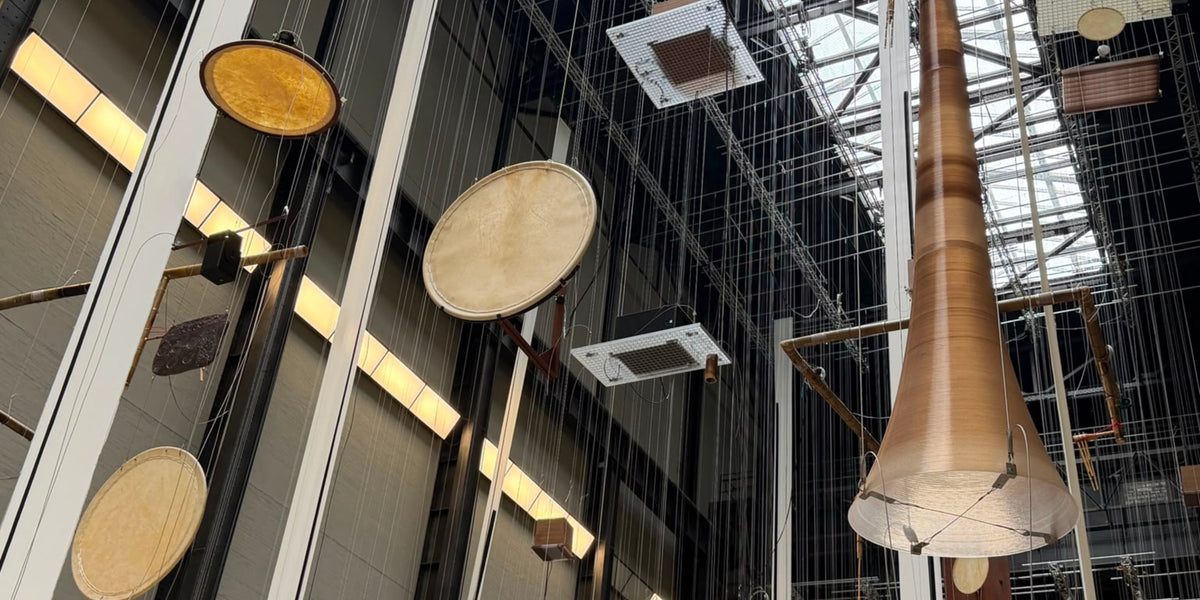
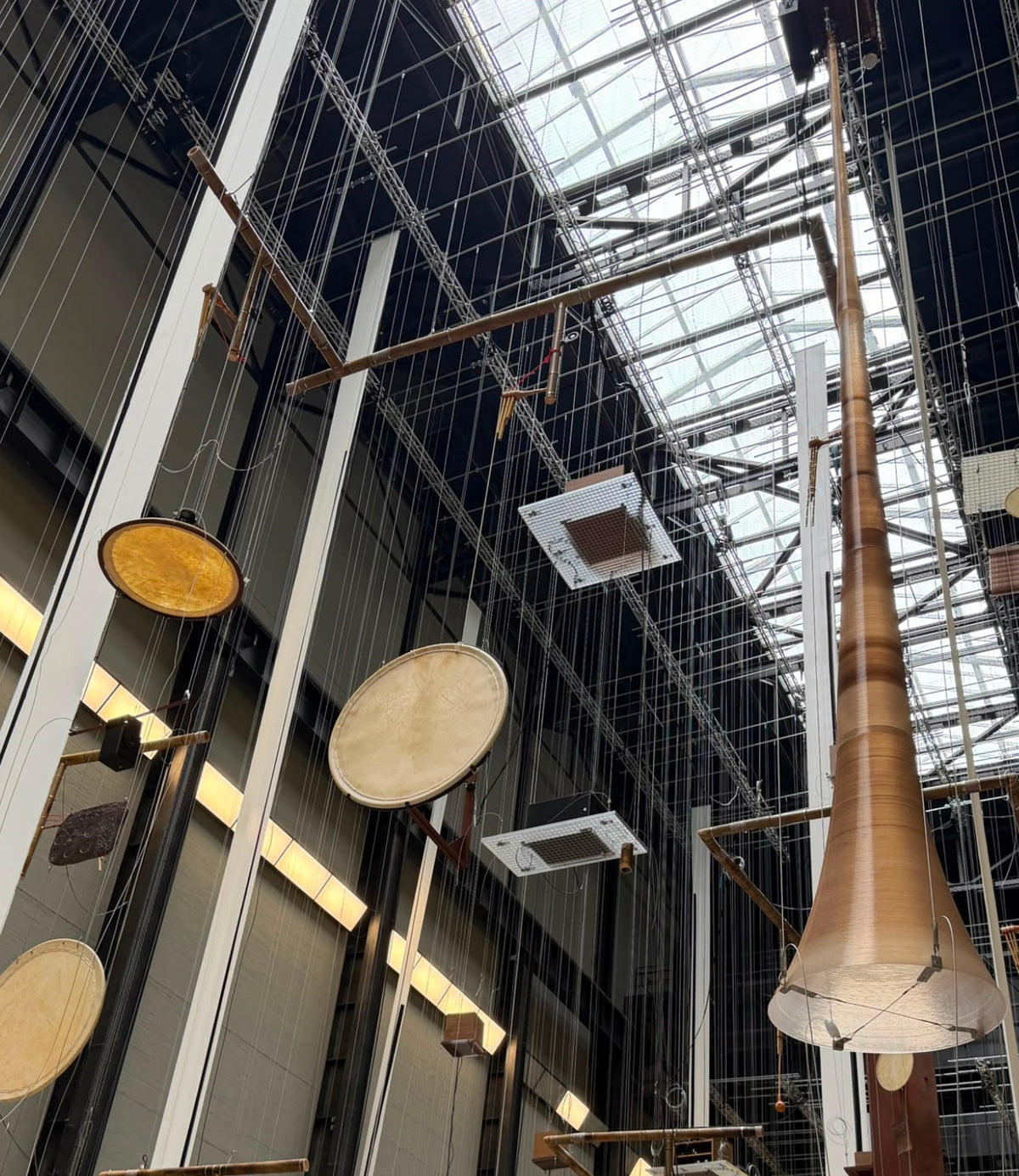
Fab.Pub worked with Mamou-Mani Architects and Tarek Atoui’s studio to produce the 3D-printed elements for the eleventh Hyundai Commission at Tate Modern.
From Research to Production
From Material Experiment to Turbine Hall
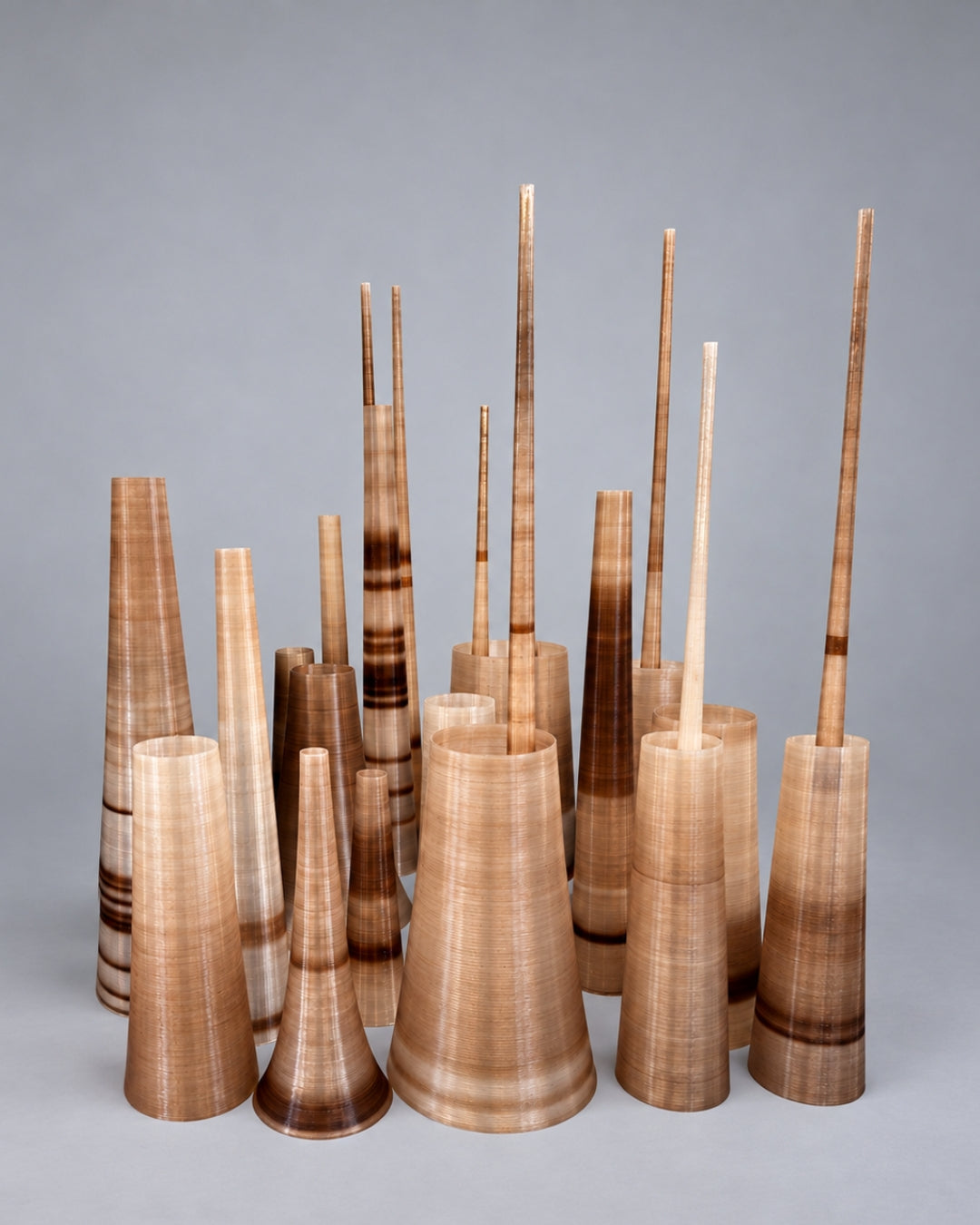
Working alongside Mamou-Mani and Studio Tarek Atoui, Fab.Pub developed the production workflow for five families of printed forms: horns, platforms, towers, table bases and boundary rings.
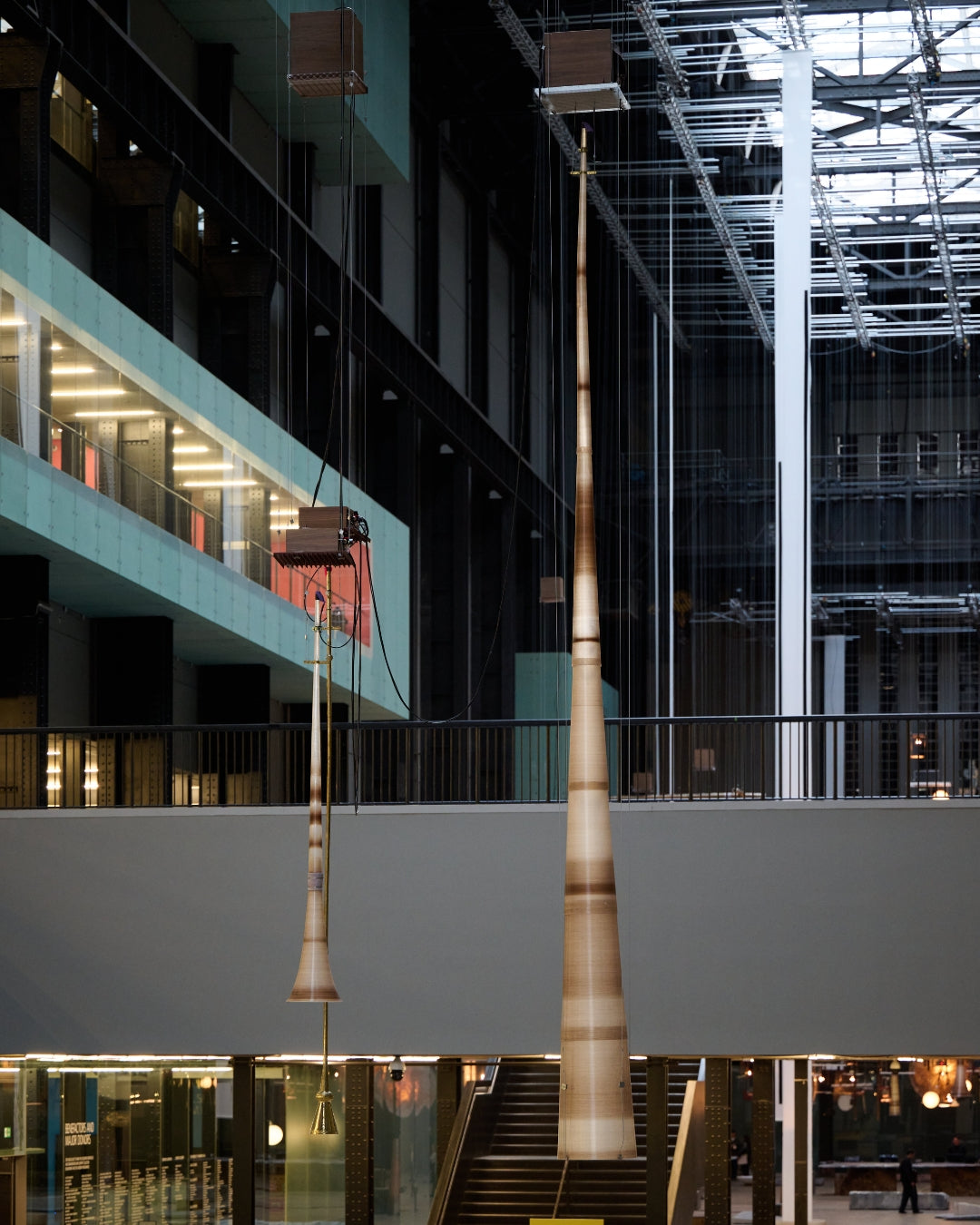
The forms ranged from boundary rings positioned across the floor to suspended horns reaching up to 8 metres, each requiring a different approach to fabrication, material behaviour and assembly.
Large horn sections were produced through robotic printing, platforms through the Mobile Factory, while towers and table bases were produced using large-format 3D printing.
Over fourteen months, the project moved through material compounding, full-scale prototyping, toolpath development, print testing, structural verification and final production before installation at Tate Modern.
Production at a Glance
over 40 m of printed horn


Developing the Material
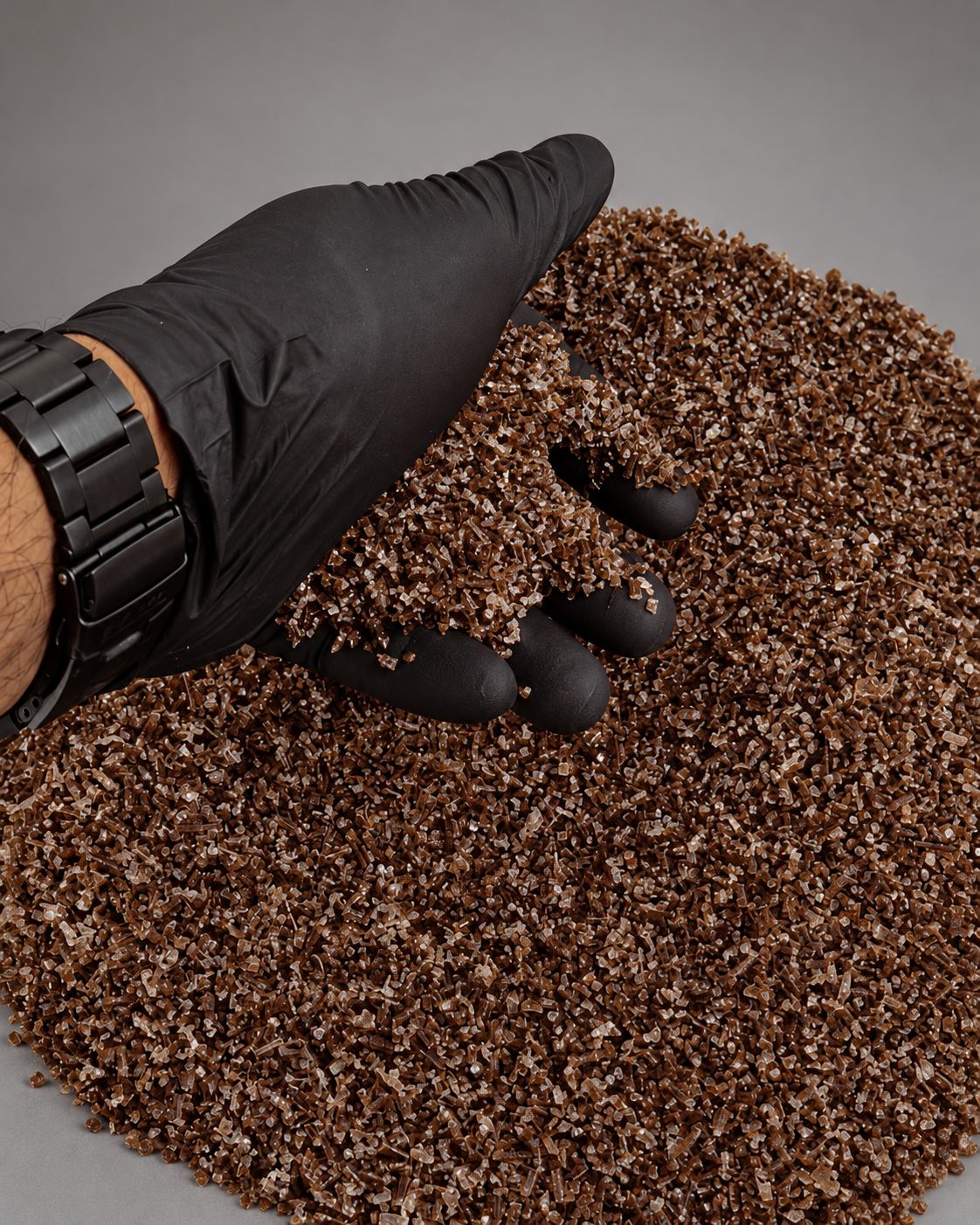

The project began with material testing in our London workshop.
We tested limestone and basalt before Tarek selected bamboo. The bamboo was compounded in-house with PLA and PETG, crushed into a printable feedstock, and then used to produce the final components.
Bamboo + PLA was used for the horns and boundary rings.
Bamboo + PETG was used for the platforms and towers.
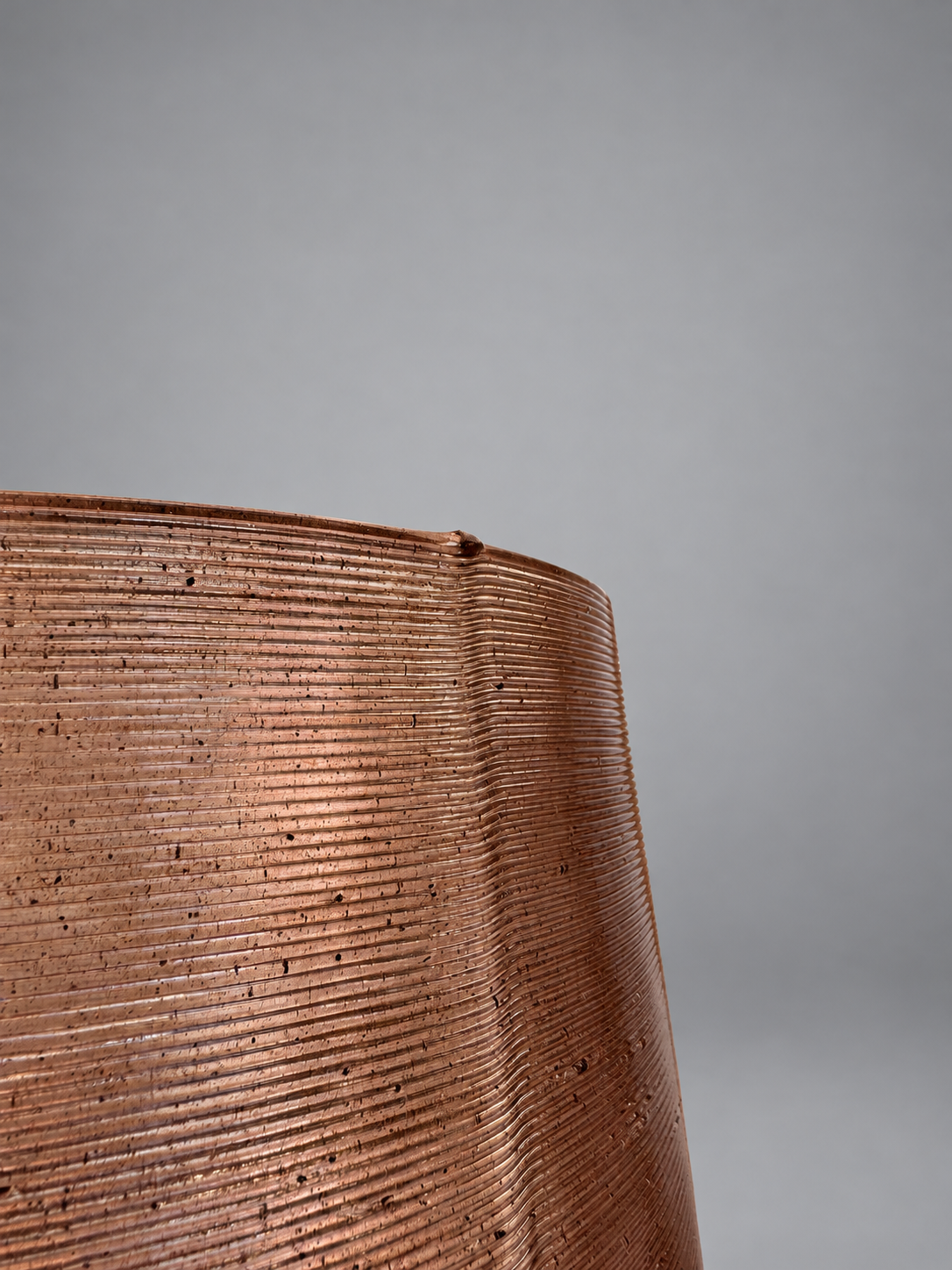
Each formulation was tested for printability, shape retention and surface appearance. The process moved from compounding to crushing to printing, resulting in the warm, fibrous bamboo finish carried through the final installation.
One Project. Multiple 3D Printing Approaches
Different components required different fabrication approaches. Large horn sections were produced through robotic printing, platforms through the Mobile Factory, and towers and table bases using large-format 3D printing.
For each element, toolpaths, extrusion rates, layer behaviour and print speeds were adjusted to suit its geometry and material behaviour, while maintaining the same bamboo finish across the installation.

Large-Scale Robotic Arm
For the longest horn sections and larger conical forms, where reach and control over changing geometry were essential.

Mobile Factory Robotic System
Platform production moved through a compact robotic printing system, bringing the same digital fabrication workflow to a different scale.

Large-Format 3D Printers
Towers and table bases were produced this way, where repeatability, scale and consistency across multiple components were important.
A Gradient Made by Hand
The gradient was the most interesting part.
A programmed blend looked rigid, so during each print the operator tipped the bamboo compound into the mix by feel.
The shifts in colour and texture are human-made: introduced by hand into an otherwise precisely controlled machine process.
The longest horns were printed in sections, with the print speed adjusting along each one as its diameter narrowed.

Printed Surface Detail
Close-up showing the layered texture and variation created through the bamboo compound during printing.

Material Testing
Workshop samples were used to test different bamboo concentrations and understand how the material changed in colour and appearance.

Gradient Sample
A test piece showing the transition from lighter to darker bamboo tones developed through the printing process.
When the Printed Object Became Part of the Soundscape
The completed installation in sound at Tate Modern.
When Tarek visited the Fab.Pub workshop, he tested one of the printed horns himself using compressed air and a membrane mouthpiece.
The response was immediate: a deep, powerful note filled the workshop, resonating through the body as much as the ear.
It was the moment the printed form became more than a fabricated object. The horn could now be experienced through sound.
Tested Before It Reached the Turbine Hall
Before installation, key components were tested at full scale with Webb Yates Engineers to verify their structural performance.
The testing included load tests on the printed platforms, full-scale suspension tests on the horns, and connection tests on the fixing system.
These tests confirmed how the printed components, connections and suspension points behaved under load, helping validate the final fabrication and installation strategy before the work was installed in Tate Modern’s Turbine Hall.

Load Test
A printed platform tested under a controlled applied load to assess structural performance.

Full-Scale Suspension Test
A full-length horn suspended to verify stability, balance and fixing performance before installation.

Fixing Test
A suspension connection tested under load to confirm the behaviour of the fixing system.
Team Credits
Artist
Tarek Atoui, with Studio Tarek Atoui
Commission
Hyundai Commission: Tarek Atoui is in partnership with Hyundai Motor.
Architecture Studio Partner
Mamou-Mani Architects
Arthur Mamou-Mani, Fun Yuen, Samuel Calkins
Digital fabrication
Fab.Pub
Arthur Mamou-Mani, James Cheung, Fun Yuen, Clinton Glen Mendonca, Giovanni Panico, Antoine Proust, Vijayalakshmi Vijayappan, Harry Kingham, Minran Xue, Paris Lau, Baskar Subramanian and Faheem Kathawala
Structural engineering
Webb Yates Engineers
Photography
© Tate (Yili Liu, Ben Fisher)